Seed Cycling for Hormone Balance: The Simple Daily Practice That Supports Your Whole Cycle
If you've ever felt like your hormones are running the show — mood swings, bloating, cramps, exhausted in the second half of your cycle, wired but tired the week before your period — you're not imagining it. And no, it isn't just stress.
One of the first things I introduce with new clients is seed cycling. It sounds simple because it is. But don't let that fool you — this is a practice that functional medicine practitioners have been prescribing for decades, rooted in real nutritional science.
What Is Seed Cycling?
Seed cycling is the practice of eating specific seeds during specific phases of your menstrual cycle to support the hormones that govern each phase.
Your cycle has two main acts:
- The follicular phase (Days 1–14): Estrogen rises and peaks at ovulation. This is your building phase — energy climbs, mood brightens, creativity flows.
- The luteal phase (Days 15–28): Progesterone takes center stage after ovulation. When this phase is well-supported, you feel grounded. When it isn't — hello, PMS.
Seed cycling works by delivering the specific nutrients your body needs to build and metabolize these hormones at exactly the right time.
Seed cycling is one small lever in a much larger system. For the full picture of how estrogen and progesterone work together across your cycle, the hormone balance pillar guide is worth reading alongside this.
The Four Seeds and Why They Work
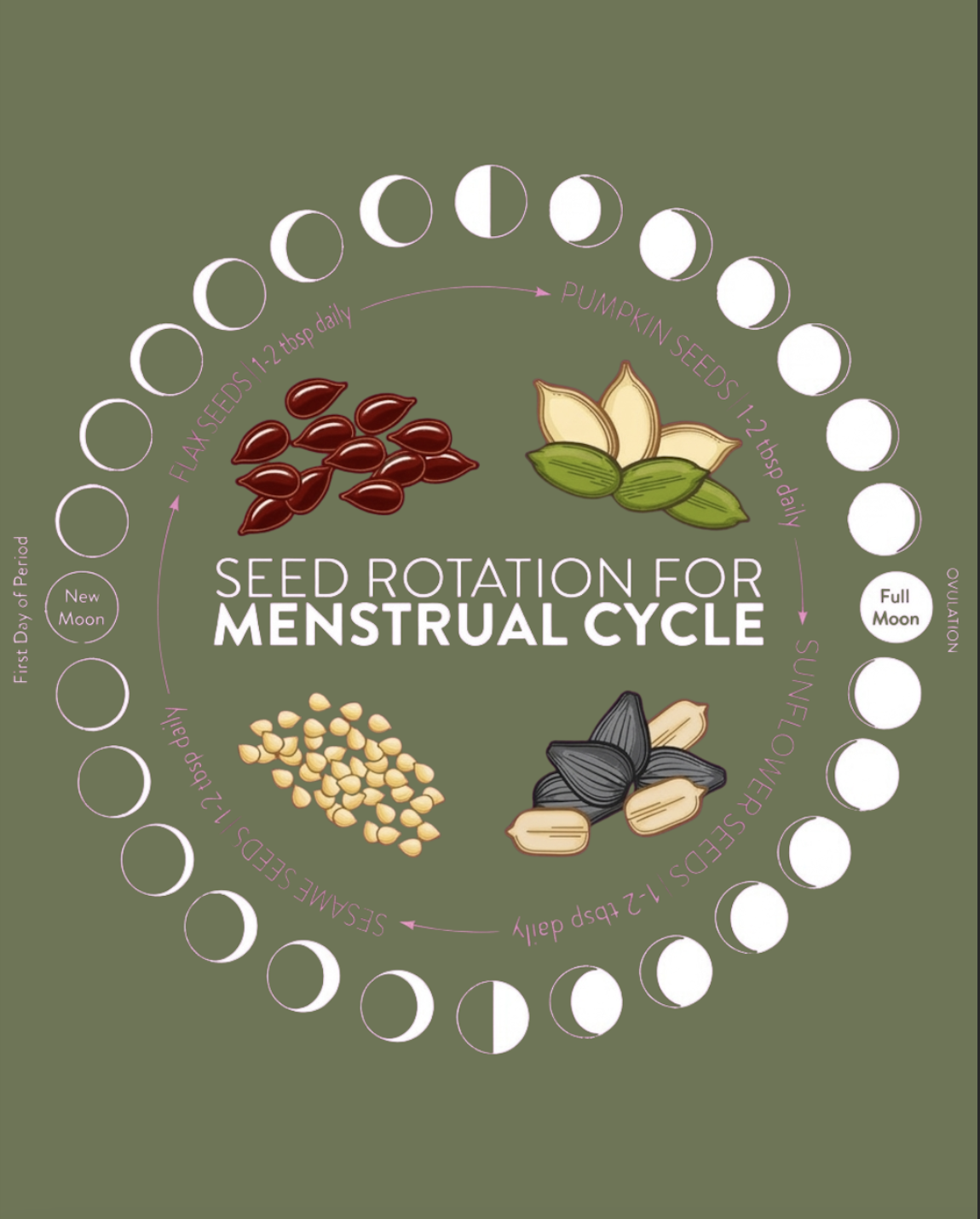
Follicular Phase: Flax + Pumpkin Seeds (Days 1–14)
Flaxseeds are the most studied lignan-containing food we have. Lignans are phytoestrogens — compounds that interact with estrogen receptors in a balancing way. They help support healthy estrogen production while also supporting your body's ability to clear excess estrogen through the gut. Research has also linked flaxseed lignans to a longer, more stable luteal phase.
Pumpkin seeds are rich in zinc, which supports healthy testosterone levels (yes, women need testosterone — it's what gives you drive and libido). They're also packed with antioxidants that protect your ovaries and eggs, and they're a natural source of tryptophan, which your body converts to serotonin and melatonin. Better seeds → better sleep → better hormones.
Dose: 1–2 tablespoons each, raw and fresh ground, daily from Day 1 through ovulation.
Luteal Phase: Sunflower + Sesame Seeds (Days 15–28)
Sunflower seeds contain vitamin E, magnesium, and iron — nutrients that directly support progesterone production and help your body clear estrogen via CYP liver genes. Magnesium has also been shown to reduce prostaglandins (the compounds behind cramping), and calcium — which sunflower seeds supply — has demonstrated measurable improvement in the mood-related symptoms of PMS.
Sesame seeds bring another potent dose of lignans and fatty acids to support the luteal phase. They've been shown to be beneficial even through perimenopause and menopause, support healthy cholesterol metabolism (your sex hormones are made from cholesterol), and help moderate inflammation — a silent driver of hormone imbalance.
Dose: 1–2 tablespoons each, raw, daily from ovulation through the end of your cycle.
Does Seed Cycling Actually Work?
Here's the honest answer: there isn't a randomized controlled trial with "seed cycling" in the title. That's less a reflection of the practice than it is of how nutrition research gets funded. Companies don't file patents on sesame seeds.
What does exist is substantial research on the individual nutrients in each seed — their effects on estrogen metabolism, progesterone support, inflammation, and cycle health. And there are decades of clinical use by functional medicine practitioners, including in my own practice, with consistent results.
My clinical experience: when women pair seed cycling with sleep, blood sugar stability, and stress management, they almost always notice improvement in PMS, cycle regularity, and energy in the second half of their cycle within 2–3 months.
Seed cycling isn't a cure-all. It's a nutritional foundation — food as medicine, not food as pharmacy.
How to Start (Even If Your Cycle Is Irregular)
If you have a regular cycle: start flax and pumpkin seeds on Day 1 of your period. Switch to sunflower and sesame at ovulation (or Day 15 if you're not tracking).
If your cycle is irregular or absent: sync with the moon. Start flax and pumpkin seeds on the new moon. Switch to sunflower and sesame on the full moon. This is a traditional approach and a practical anchor when your body's rhythm hasn't been established yet.
You can start mid-cycle — pick up wherever you are and just begin.
Practical tips:
- Grind flax seeds fresh (pre-ground oxidizes quickly) — a small coffee grinder works perfectly
- Add to smoothies, oatmeal, yogurt, salad dressings, or just stir into water
- Pumpkin and sunflower seeds can be eaten whole, as a snack or on top of meals
- Sesame seeds can be used as tahini if you prefer
Who Benefits Most from Seed Cycling?
In my practice, I see the most noticeable results with women who are:
- Coming off hormonal birth control and working to restore their natural cycle
- Dealing with PMS, breast tenderness, or mood instability in the luteal phase
- Experiencing irregular or missing periods
- Navigating perimenopause and shifting hormone patterns
- Simply looking for a food-first approach to cycle support
Our Preferred Partner: Beeya
If you want a done-for-you option, I recommend Beeya — a seed cycling blend specifically formulated for each phase of your cycle. It takes the guesswork out of sourcing, grinding, and measuring, and it's the easiest way to stay consistent. Grab it here.
The Bigger Picture
Seed cycling works best as part of a comprehensive approach to hormone health — not as a standalone fix. The women I work with who see the most dramatic changes are addressing sleep, blood sugar regulation, gut health, and stress alongside their nutrition.
If you've been told your labs are "normal" but you don't feel normal — your hormones are worth investigating more deeply. Seed cycling is a gentle, low-risk starting point. And for many women, it's the beginning of finally feeling like themselves again.
Wondering if Your Hormones Are the Root Cause of How You're Feeling?
Take our free assessment to identify your unique hormone patterns and get a personalized starting point for your healing journey.
Take the Root Cause Assessment
Or book a discovery call to talk through what's actually going on in your body.
This post is for educational purposes and does not constitute medical advice. Rachel Stephens is a functional medicine practitioner. Individual results vary. Always work with a qualified provider before making changes to your health protocol.